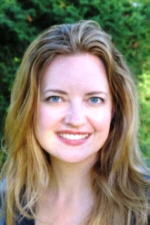
On Writing
Ellen Baker on her writing background…
I’ve always been a keeper of stories. When I was six, I wrote my first family history, sitting down at my mom’s typewriter to pick out the letters: “I have a new cousin. His name is Caleb. I got to hold him.” I rolled the paper out of the typewriter, put it in a file in my new desk, and held onto it for years.
I’ve been an observer, someone who likes to try to make sense of things, to create structure, to solve mysteries, to find meaning in the smallest bits of lives long past.
I was born in Grand Rapids, Minnesota, and lived my first almost-seven years in a little yellow house on a dead-end dirt road seven miles north of town. We didn’t have a TV. My mom, who has her master’s in English, tended a massive garden and put up nearly 80 quarts of pickles every year, until I entered kindergarten and she went back to teaching. My dad worked at the community college, teaching and directing plays. I learned to cross-country ski on a pair of six-inch wide red plastic skis, to ice skate, to weed a garden, to identify wildflowers, to carry and stack wood for the stove that kept our house heated. Mostly, though, I spent my time with my older brother, inventing worlds and stories. In the summer, we built towns outdoors populated with characters of our own creation who drove around in Matchbox cars and survived unending dramas. In the winter, we created similar villages indoors using Legos. Inspired by our visits to my dad’s theater, we also staged plays. Our most elaborate was our musical production of “Man of La Mancha”; we charged my parents each a dime to attend the performance.
Love of books was passed on through the generations as surely as nearsightedness and curly hair. Trips to the library were weekly occurrences. I still remember the children’s section at the Grand Rapids public library at that time, a deliciously private room in the basement (kids only!) with a big red carpeted “stage” that filled the center of it, to climb on and sit and page through books. (I would get annoyed when some kids thought it was for climbing only – they would make noise and distract me.)
My family moved to Rhinelander, Wisconsin, when I was almost seven and going into first grade. We got to know the library there right away, too. Over the next couple of years, I discovered chapter fiction, including the Bobbsey Twins and Nancy Drew, plus my favorites, Beverly Cleary and Judy Blume. I especially loved to read before I went to sleep at night, and whenever my mom would tell me it was time to turn out the light, I would always plead, “Just let me finish my chapter!” And though I was basically a rule-abiding kid, when Nancy Drew was in the middle of solving a case, I usually got in at least one more chapter after that.
Around this time, my mom, who taught college-level composition, would occasionally give me a spare red Papermate pen. I thought there was no better gift. I loved the feel of them gliding across paper, especially after I learned to write in cursive. One magical day, she brought me a blue one. With that blue pen, I wrote my first short story, about a dog named Ludwig whose owner, a struggling composer named Van Beethoven, was one day delighted to discover that Ludwig snored in musical notes. Through the transcription of his dog’s brilliant snorts and snuffles, Mr. Beethoven found success. As I recall it, my piano teacher was unimpressed with the tale.
When I was in fourth grade, my family moved to a small farming town in northern Illinois, near Rockford. Writing and reading continued to be my greatest passions. In eighth grade, I read John Jakes’ North and South trilogy and fell in love with historical fiction.
Then, on my first day of high school, when I was 13, my mom’s sister was walking down a street in Chicago when a man knocked her to the ground for the $4 in her purse. The back of her head struck the pavement. She never regained consciousness; two days later, she was dead. From then on, in my family, every day was lived in delicate denial of our collective grief, and in careful avoidance of my mom’s intense mourning. Perhaps seeking escape, I began writing my first historical novel, a romantic tale of a young girl in Chicago who elopes to Wisconsin with a handsome older man. My cousin Amanda, two years younger than me, was my biggest fan. My mom would photocopy my handwritten pages, and I’d mail them off to Amanda. She would read them right away and write back immediately: “SEND MORE!!!! I WANT TO KNOW WHAT HAPPENS!!!!” I wrote 48 chapters before the project finally gave up the ghost.
When I was fifteen, we moved again, this time to Brookings, South Dakota, in time for my junior year. Caught up in the dramas of high school, I came to believe that writing fiction was a childish phase I had outgrown. But then, in the middle of my senior year, my dad took me to meet the writer Frederick Manfred at his home called Roundwind on the prairie near Luverne, Minnesota. I got to see the tower in which Fred did his writing, and the rows and rows of books that lined the shelves throughout his home and office. He even showed me one of his typed manuscripts, boxed up and ready to send off to his editor. And he told me that if I sent him some of my writing, he would read it. Back home, I typed up some pages from my old novel, the one I’d written my freshman year. A week later, the phone rang – it was early on a Saturday morning, and I was getting dressed in my Hardee’s uniform to go to work shoveling French fries – and it was Fred Manfred, calling to say that he had read my work. He said I was a good writer, and that, if I kept at it, I would be published by the time I was thirty. Thirty? I’m going to live to be thirty? I thought.
But the experience must have inspired me. A few months later, just after I graduated from high school, I started writing another novel. By the summer after my junior year of college, I had a finished book, a long tale of life in a small town in Minnesota in 1905, from the perspectives of several members of the community.
In college at Lawrence University in Appleton, Wisconsin, I was a psychology major, and had planned to pursue a career as a marriage counselor. But by the time I finished my novel, I knew that what I really wanted to be was a writer. My junior and senior years, I started taking a lot more literature and history classes, as well as all the creative writing classes I could (two). I also got a summer internship at a local historical society in Ephraim, Wisconsin, a stunningly beautiful, idyllic little town on the shores of Green Bay in Door County. Inspired by both the place and the hands-on experience with old shoes and letters and photographs, I began another novel – the tale of a family called the Mickelsons who had lost a son in World War I. It was 1919, and they’d come to their summer home in “Stone Harbor, Wisconsin” for the first summer after the war and tried to pretend nothing had happened. Whenever I had a free hour or two, I’d toss my notebook into my Honda Civic and drive to one of the many gorgeous parks in the area – Peninsula Park, Europe Bay, Ellison Bay Bluff – and sit by the water writing. I held myself to producing fifteen pages per week, so by the end of the summer I had “finished” a book-length manuscript, though I knew it needed a great deal of work.
After finishing college, I spent a year working at a living history farm called The Homeplace, located near Dover, Tennessee. This was a great way to really get a sense of a different segment of American culture, and a perfect way to get hands-on experience with how people might have lived in the past. I cooked on a wood stove, labored in the garden, cleaned house with nothing more than a straw broom, suffered through the heat of summer and angled up close to the fire when the damp chill of autumn struck. Not that my experience was truly “historically accurate”: I had the luxury of going home to running water and air conditioning every night, as well as the odd experience of day after day having to explain to tourists that yes, I was hot in my long dress.
I moved from Tennessee to grad school at the University of Minnesota in Minneapolis – experiencing more than a little culture shock in the transition! I was in the American Studies department, and my focus was on gender history in early twentieth century America. I left grad school with a master’s in 2000 and went back to Ephraim, Wisconsin, to work ¾-time at the historical society, determined to devote every bit of my spare time to revising my novel about the Mickelsons. As time had allowed, I’d been hammering away at it over the years, but now I was ready to really buckle down.
Once back in Ephraim, I did rewrite my novel, but I had also just fallen in love – with a soldier in the 101st Airborne who was stationed at Fort Campbell, Kentucky. A long-distance relationship ensued, then marriage, and a few moves, from Wisconsin to Kentucky then to Minnesota and then to Wisconsin again. Mostly, we were just trying to find our way, make our living, get to know each other. I have to admit I became a little frustrated – I felt my writing had taken a backseat to everything else. But ultimately these experiences would all be “grist for the writer’s mill,” as my grandma is fond of saying.
In 2003, I’d been working as a museum curator at a World War II museum in northern Wisconsin for a little over a year when a job opened up at a local independent bookstore. It was a gamble to give up a full-time job with a professional salary to work part-time, but, despite all the detours it seemed I had taken, I still wanted to write, and the bookstore job seemed like it would be a perfect complement. I regretted “abandoning the cause” of telling the veterans’ stories at the museum, but I hoped that through my fiction writing I would some day be able to communicate some of the stories they had shared with me.
One of the best things about starting work at the bookstore is that right away I dove into reading as many books as I could – I had been like a fish out of water without them when I was so overextended with museum work. Now I usually read one or two books each week. When one captures me, I get swallowed whole by it. My husband – who often jokes about the towers of books that teeter throughout the house waiting for my attention – knows not to try to talk to me until I’ve turned the last page and – if the book has been exceptional – taken a moment to weep.
I began writing KEEPING THE HOUSE just before leaving my museum job. Having grown away from the novel I’d been working on since college, I wanted to write something that would reflect my more recent experiences. Working twenty-five or thirty hours a week at the bookstore allowed me to spend twenty hours each week working on KEEPING THE HOUSE – whether researching, writing, or just staring at the computer screen wondering what should happen next. I “finished” the manuscript once, then rewrote about half of it and “finished” it again, then one more time, and another, until finally I felt I could let it out into the world. Now I’ll move on and begin to work on telling another story. For me, being a keeper of stories is the best life imaginable.