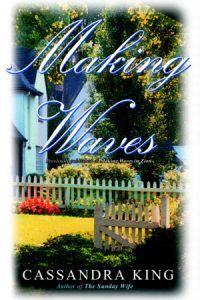
Book Group Guide
The questions that follow are intended to enhance your group’s reading and discussion of MAKING WAVES by Cassandra King Conroy.
Discussions/Questions
1. Though Donnette is 20 years old, her thoughts and behavior can be very childlike. How is this most strongly demonstrated? What could account for this quality in her?
2. What are some of the sensory clues provided by the author that this story takes place in the Deep South? The novels setting, in the tiny town of Zion, Alabama is crucial to the story. Can you imagine the events and characters taking place or existing anywhere else in the United States?
3. At no time in the story does the author indicate what is happening in the world outside Zion County. What is the significance of this?
4. What role does the beauty parlor play in the town’s affairs?
5. The author makes the affection between Tim and Taylor appear to border on homosexuality–or does she? What does Tim and Taylor’s youthful relationship say about the expression of friendship between men today in this country?
6. One of the central characters of the story, the football hero Tim, did not have a voice. What was the effect of having him seen only through the eyes of others?
7. What other novels use the device of having different characters tell the story through their own voice? Is this a peculiar feature of Southern writing, and if so, why is it so?
8. Do the transformation of Ellis from a drab mouse to a glamour puss, and her rejections of religious teachings seem plausible? Could she have been the backbone of the story? What other characters seem capable of taking over the story, or perhaps spinning off a new novel?
9. Presumably Tim’s artistic abilities were suppressed for the same reason that Tim and Taylor’s love for each other was–it wasn’t “manly.” What other Southern writers are known for employing themes of repressed desires and frustration?
10. Did Making Waves alter your impressions of life in the Deep South in any way? What did you learn?
11. Miss Maudie’s funeral was the catalyst that starts the novel and brings Tim and Taylor back together. What other new beginnings came about as a result of the funeral?
About the Author
Cassandra King was born in Alabama, where she taught college-level English and writing. She now lives in South Carolina with her husband, author Pat Conroy.