|
|
About this guide...

Return to main book page...
|
The questions that
follow are intended to enhance your group's reading and discussion of
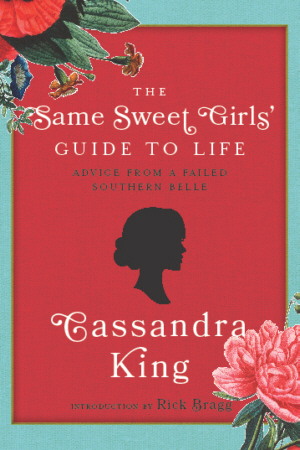
THE SAME SWEET GIRLS by Cassandra King.
Questions
1. Look at the Walt Whitman quote at the beginning of The Same Sweet
Girls. Why does King use this here?
2. Why does Corrine state early on that, "The illusion of sweetness,
that's all that counts. We don't have to be sincerely sweet, but by God
we have to be good at faking it. Southern girls will stab you in the
back, same as anyone else, but we'll give you a sugary smile while doing
it"? Why is this important to the story? How do Southern women differ
from women in other parts of the country?
3. Looking at each chapter, how is the book structured? Why does King
utilize this style here? What is the affect of multiple narrators?
4. Briefly describe each of the Same Sweet Girls. Share your impression
of the group. Who do you like the most, and why? What are their
backgrounds? How did they become a group, and why are they such good
friends?
5. Consider Miles, Jesse Phoenix, Joe Ed, Paul and Cal. What are your
impressions of these men? What are their roles in the story?
6. Thinking about the couplings of Julia and Joe Ed, Corrine and Miles,
and Lanier and Paul, how did these couples get together? What kind of
relationships do these Same Sweet Girls have with the men in their
lives? What do these relationships reveal, or possibly reflect, about
the Same Sweet Girls views of themselves?
7. Focusing on Astor's and Roseanelle's role in the book. Why are these
unlikely characters accepted and tolerated, even loved, by the rest of
the group? How do they influence other characters in the book? Why do
others accept and even ignore such obvious flaws in their friends?
8. Lanier keeps a sort of diary, what she calls her Life Lessons
notebook. Think about some of Lanier's notebook entries. For example,
"Any landing you walk away from is a good landing;" "When the pupil is
ready, the teacher appears;" "Seems to me that all males are obsessed
with expanding their bodies and females with shrinking theirs, which
must have something to do with their self-images." Discuss what they
mean and whether or not they are helpful to you.
9. In Chapter 12, what do you make of Julia's saying she "survived life
by slow paddling down the river of denial"? What has she been denying?
Recount her relationship with her mother. What was her mother's reaction
when Bethany was born? Did Julia somehow agree with her mother? How does
Julia evolve, and what enables her to do so?
10. Looking at Corrine, what do the gourds represent, both literally and
figuratively? Why does King choose gourds instead of canvas or pottery
for Corrine's art? Trace Corrine's personal history. Why is she the one
who has a terminal disease? What does Miles mean when he says to her,
"Your biography becomes your biology?" Is this true in her case? Do you
believe this is true in general? Why?
11. What gives Corrine the motivation to stand up to Miles? Share how
you reacted when she finally does.
12. In Chapter 18, Lindy confronts Lanier about Lanier's affect on her
and others: "Then change, Mama . . ." How did you react do this speech?
What would you say to Lindy? What would you say to Lanier?
13. In Chapter 23, there is a discussion of helping a friend die. What
would you do if a friend or family member asked you to assist their
death? Would you want that kind of help? Knowing what Corrine does about
her disease, what you advise her to do about her treatment? Why is
Lanier so surprised when she learns Paul might assist someone's death?
14. Why is Cal so attracted to Corrine? What is significant about the
timing of his interest? What is the significance of the large kettle
gourd that he returns to her? What enables his aged grandmother to
understand the purpose of this kettle gourd? Discuss the paragraph in
Chapter 26 where Cal says to Corrine, "Damn right you're not like me . .
. You've got to finish that one."
15. What resonates, and affects you the most, about The Same Sweet
Girls? What stays with you?
About the Author
Cassandra King is a native of Alabama, where she formerly taught
English and creative writing classes. She has published stories and essays
in various quarterlies and anthologies, and her second novel, The
Sunday Wife, was published to fine reviews and acclaim. It was a SEBA
bestseller. She currently resides in South Carolina with her husband, Pat
Conroy. She belongs to a real-life Same Sweet Girls group, which reunites
every year.
Return to main book page...
|