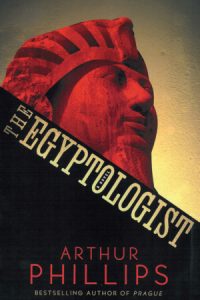
The Story Behind the Book
Secrets of the Crypt
Write what you know!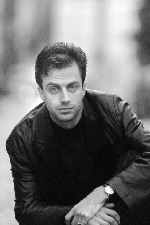
Hemingway’s tyrannical proverb haunts writing classes and roils the sleep of the lonely would-be novelist, who in relentless dreams and depressing reality alike feels himself drowning in Uncle Ernest’s quasi-papal bull. “Write what I know? What I know… But what,” the author frets, “if I don’t know anything?”
In that case, not to worry, for there is always the British Museum.
If you should decide to write a novel about a topic you know almost nothing about, a scholarly discipline requiring years to master, if you feel compelled to set the story in a land you’ve scarcely visited, during an era you can only dimly conjure from childhood reading and yellowed clippings, if you have followed your hyperactive and petulant imagination down a rabbit hole and there gazed at glowing, magical projections of inverted pyramids and pith-helmeted lunatics and pharaohs with unconventional appetites, but found little by way of actual knowledge, rest easy, because at the British Museum you will make a new friend: an expert who not only knows everything, but who is required-yes, required-to answer all your e-questions, no matter how many, how foolish, how wrong-headed, fantastic, or just downright dirty.
I had an idea for a story. Foolishly, I thought I would need just one or two questions cleared up. Wandering the moors of the Web, I unearthed the Museum’s site. “How,” I asked the curator on e-duty, “do I write ‘to be sexually aroused’ in hieroglyphics?”
“Well,” came the quick reply from the cyberstacks, the raising of an eyebrow almost audible in the e-mail, “first: hieroglyphic is the adjective. The hieroglyphs, however, you will find in the attachment.” And in the attachment: authentic hand-drawn hieroglyphs displaying the ancient alphabet’s quite logical solution to my question, once you think about it. Yes, if I (or a twelve-year-old boy) had to draw a picture to express this idea, this would be the picture.
I was giddy, in a twelve-year-old-boy sort of way. I also was very slowly realizing the vast depths of my ignorance. I didn’t know anything about this topic. I had committed myself to fabricating an expertise, but this was going to be tricky. “If only,” I mused, “if only there were some magic jinn who would appear and be required to answer my questions for me…” (No need to thank me, Mr. Phillips. Answering the public’s questions is part of our mandate.) And with that I had my tonic jinn.
I needed a time period sufficiently shrouded in chaos that I could hide an apocryphal king (the XIIIth Dynasty, Mr. Phillips). I needed a location just out of view, but near Carter’s site (Deir el Bahari, Mr. Phillips). I needed a, uh, a, a whatchamajiggy (cartouche, Mr. Phillips). How long would it take on donkeyback to (about an hour), and can you see that from there (no), and was that how we spelled it in 1922 (some did), and what happens to the canopic organs in the afterlife (they are replanted in the resurrected body, Mr. Phillips)?
Over several months, my novel’s giddy plot persisted in yanking me into the dark and dusty chambers of the unknown-dank basements where I had no context for my characters, no understanding of their daily habits or the world they inhabited, none of the necessary foundations of a story. But in that darkness, without fail, every single time, I was met by my loyal British Museum staffer, flashlight in hand, ready and willing (if not precisely delighted) to wrangle me and my proliferating characters spanning 3500 years back to the well-lit halls of plausibility.
Day after day, this same man (invisible, electronic) was there to answer my next question as I sought clarification of yesterday’s clarification. Bit by bit, my characters had ground to walk on, history to respond to, and daily practice to occupy them. The more I could describe what was real in A.D.. 1922 and 1650 B.C., the more clearly I could see the small spaces where my outlandish story might have occurred. What did we know of the XIIIth Dynasty as of 1922? Are there many more clefts like Hat-shep-sut’s unused tomb? And is there a name for that final hieroglyph you sent me (Dear Mr. Phillips, it is a grammatical determinative called the issuing penis)?
I have never been to the British Museum, so for me its leather chairs still creak under harrumphing old colonels with handlebar moustaches, wheezing tubercular poets in frayed brown sweaters, and Karl Marx. And, now, joining them in the corner, one calm Egyptologist, shaking his head as the peculiar novelist’s name appears in his e-mail inbox again. And again.
The imagination is a mad and unrestrainable archaeologist; for me, the writing of novels is starting to resemble nothing so much as a tomb excavation begun with high hopes and limited information. A chamber is cleared; I am thrilled with it: it is precisely the chamber that I set off expecting, but wait… what’s down this hall? Another chamber, altogether grander (requiring just a luminous fact or two for clarity), and what I originally set off to find turns out to be nothing but a paltry antechamber, a lobby for a labyrinth I had never dreamt of, an underground palace I would never have found if I insisted on exploring only the well-lit regions of what I know.
About the author
Arthur Phillips was born in Minneapolis and educated at Harvard. He has been a child actor, a jazz musician, a speechwriter, a dismally failed entrepreneur, and a five-time Jeopardy! champion. His first novel, PRAGUE, was a national bestseller, a New York Times Notable Book, and the recipient of the Los Angeles Times/Art Seidenbaum prize for best first novel. It has been translated into seven languages. He lives in New York with his wife and two sons.