Publishers Weekly Interview
Facing the Music
Publishers Weekly Talks with Lisa Tucker
by Kevin Howell — March 17, 2003
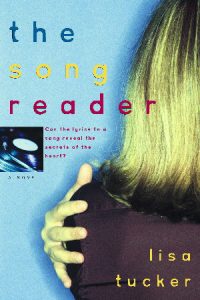
PW: What is “song reading” [as in The Song Reader, reviewed on p. 50]?
Lisa Tucker: Song reading is using songs to read someone’s heart. A palm reader uses palms, a tarot card reader uses tarot cards. A song reader uses the songs a customer is haunted by to discover what the customer really fears, wants, desires.
PW: How did you come up with the idea?
LT: I think everybody senses that music has something to do with memory. When you’re driving down the street and hear a song from a high school dance on the radio, you find yourself thinking about that dance. The song triggers the memory, in the same way that the smell of chalk can make you think of your first-grade class. I came up with the idea of song reading when I realized these triggers wouldn’t have to come from outside ourselves. We don’t normally find ourselves smelling chalk for no reason, but we can find ourselves humming a song we haven’t heard in years for no obvious reason. I couldn’t help wondering: why that particular song? Why now? Could the song have entered your mind at this point in your life because it was telling you something you needed to know?
PW: It’s a fascinating idea, but you’ve also built a multilayered, suspenseful family drama around it.
LT: I wanted the novel to explore what it means for someone to have a gift like Mary Beth does. Her younger sister, Leeann, starts out thinking nothing bad can happen because Mary Beth is helping people. She finds out that the world is a lot more complicated and that her own family is much more troubled than she knew.
PW: The Song Reader is a page-turner. Did you set out to write a novel with a strong plot?
LT: The novels I love most work on many levels: they have beautiful language and memorable characters, but they also have a fascinating story. I think stories have always been important to readers, and probably always will be. Even great authors like Toni Morrison, Russell Banks and Barbara Kingsolver maintain their dedicated readers, in part, because they continue to have stories to tell.
PW: You’re published by Pocket Book’s new imprint, Downtown Press, which is geared toward attracting women readers. Is that your primary audience?
LT: I remember reading somewhere that 80% of novels are purchased by women. If this is true, then most books have a primarily female audience, including mine. That said, I’ve had a very positive response from male readers, and I think the song reading in particular is interesting to both men and women. Also, I think the quest to find understanding and forgiveness within a troubled family has universal appeal. What matters is that the characters are identifiable to readers so they get pulled into the story.
PW: Why did you turn down a hardcover offer in favor of a trade paperback original?
LT: Even though I’d heard that it’s harder to get reviews in a trade paperback format, in the end, it wasn’t a choice for me. I wanted my book to be affordable so that people like the characters in the novel could afford to buy it. It’s too bad, but very few people I know can just plunk down $23.95 for a hardcover anymore, especially if the writer is an unknown. My hope is that many more readers will feel they can take a chance on The Song Reader because it’s relatively inexpensive. Booksellers can recommend it to their customers more readily; book clubs can choose it whenever it interests them. The novel will have an easier time making its way into the world.