Book Group Guide
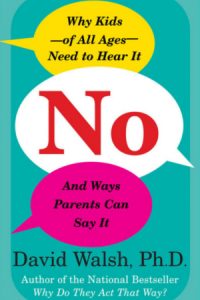
The questions that follow are intended to enhance your group’s reading and discussion of NO: WHY KIDS OF ALL AGES NEED TO HEAR IT AND WAYS PARENTS CAN SAY IT by David Walsh, Ph. D
Discussion Questions
1. Do you agree that today’s parents have a more difficult time saying “no” than parents did in previous generation? Why do you agree or disagree?
2. If you agree that today’s parents have a harder time saying “no,” why do you think that is the case?
3. Do you see evidence of “discipline deficit disorder” in today’s youth?
4. Research shows that self-discipline is twice as strong a predictor of school success as intelligence. Does that make sense to you? Do you have any experiences of your own or of your children that support this?
5. What do you think are the key ingredients of self-discipline? How can you help your children cultivate them?
6. Dr. Dave states that the word “no” is not as important as the strategy, and that there are many ways to say “no” without using the word. Can you identify some examples?
7. Do you agree that our country’s economic competitiveness is in jeopardy unless we teach our children and youth the lessons of “no”?
8. Do you think that the lessons of “no” are important in building self discipline in children?
9. No describes three styles of parenting: permissive, authoritarian, and balanced. How would you describe your own style of parenting?
10. In your opinion, what are the best ways that parents can build self-esteem in their children?
11. Discuss your views on spanking as a discipline strategy.
12. Discuss how you manage media in your home.
13. Were there any “aha” moments for you while reading No? If so, what were they?
14. Will you make any changes or adjustments to your parenting approaches as a result of reading No? If so, what are they?